Best Sustainable Books on Eco-Friendly Living
Sustainable Book Club
January 9, 2020 | Kathryn Kellogg
Read on for the best sustainable books on eco-friendly living! These books about sustainable living are a great start if you’re just beginning a zero waste journey. Even if you’re experienced, there’s always something new to learn, and these green living books have a ton to offer.
Sustainable living books are becoming more and more popular as the number of people looking for more sustainable living options become interested in them. In my zero waste journey, I’ve sought to educate myself heavily on the matter and am sharing the best books on sustainability that I’ve found so far. Plus, there’s a surprise at the end of this list of the best sustainable books!
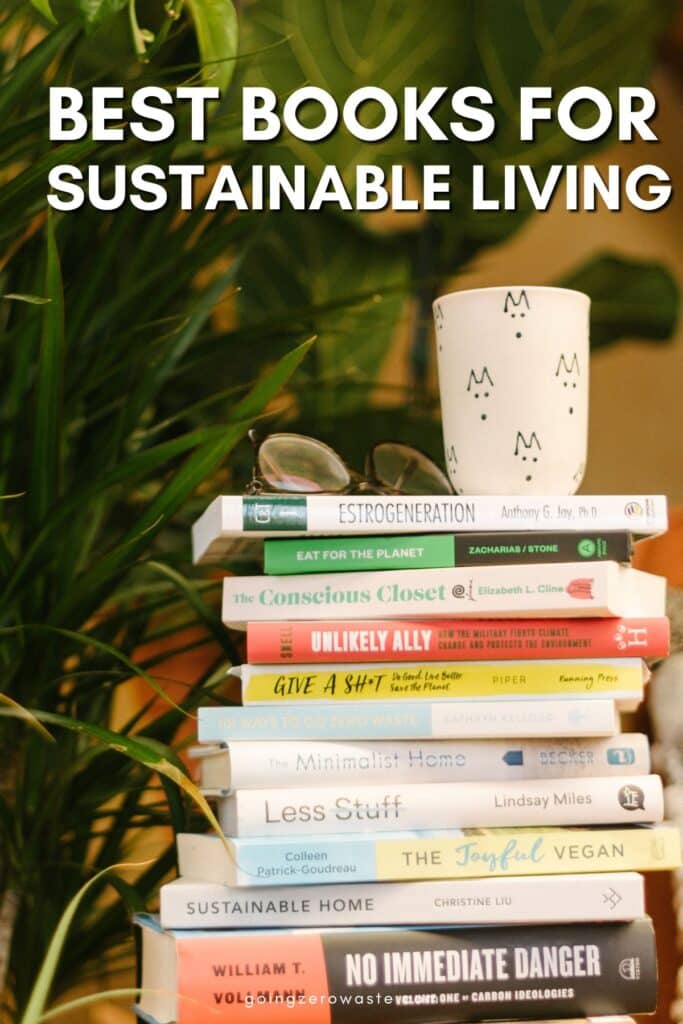
Table of Contents
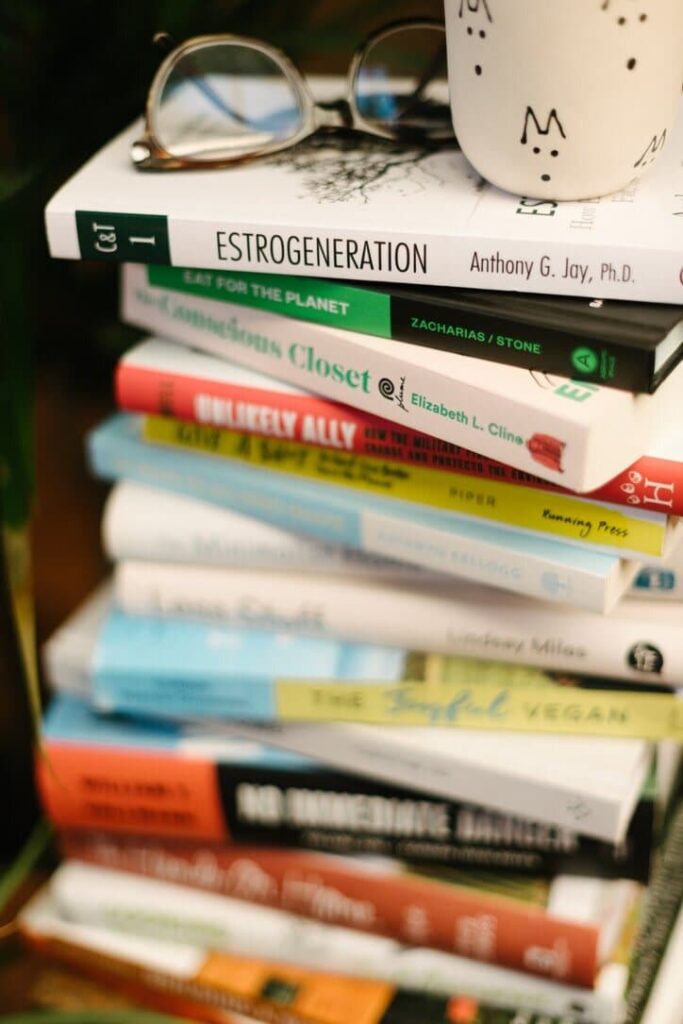
sustainable books
As a kid, my TV time was limited to one hour per day. I would carefully select my shows, which usually consisted of back-to-back Wishbone or a solid Arthur/Wishbone split on PBS. Any Wishbone fans in the house!?
I’ve always loved reading, so when I wasn’t watching Wishbone talk about great novels, I was reading them.
Well, I mean, reading the Wishbone novels, and obviously every Nancy Drew book 14x over. But, as I got older, most of my leisure reading turned into reading for school and studying.
And, then I stopped reading. I’m not sure when I stopped, but my life got chaotic and I didn’t make time to read.
Last year, I reversed the trend and read 35 books! I’m so proud of myself and I would love to read even more this year.
I had a good mix of leisure books (still obsessed with mysteries — the Sherlock Holmes Wishbone is the best Wishbone, fight me) and my fair share of books about sustainable living.
I think most of us want to read more, but without a teacher handing out a syllabus full of books with a deadline, our best intentions are surpassed by more pressing day to day tasks.
So, I thought it would be fun to start a little virtual book club! Collectively, we could hold each other accountable for actually reading the books instead of them collecting dust on our bookshelves.

how the green living book club works:
I’m going to announce a new book every two months. I’ll have a blog post, email, and Instagram announcing the new arrival.
Around 6 weeks after the first book, we’ll have a virtual chat where we’ll get together and talk about the book. I’ll ask about the biggest takeaways, things you liked or didn’t like, and have a doc full of prompts that you can choose to answer.
I’m still looking at a few different platforms for hosting this and deciding between a chat room vs. doing a video chat. Then, around 2 weeks later, I’ll announce the next book. I’ll send you reminders via email and my Instagram stories.
what kind of sustainable living books should I expect?
It goes without saying that all of the books will be environmentally focused!
I want to read through a range of topics like food, fashion, minimalism, health, social justice, and more.
However, the common theme of all of the books will be in their style.
I promise that I’m not going to give you any downers. I can’t stand depressing books that offer no solutions.
In my opinion, the best books on sustainability highlight the problems, but more importantly, propose solutions. I honestly think books that only present the problem without offering solutions are l-a-z-y. So, we won’t be reading them!
I really want to focus on books about sustainable living that offer hope. My platform is dedicated to both hope and solutions, so this club will reflect that.
do I have to buy the books through you?
Absolutely not! I won’t be selling most books directly (but see the surprise at the end!).
The sustainable living books are linked, however, and I do make a small commission if you choose to purchase through that link — but that is not a requirement.
I want you to enjoy your green living book however you like, whether that’s audio, digital, or physical copy, and of course don’t forget to check out your local library.
how do I sign up?
The most important thing you need to do is sign up for my email list! I will email out all of the information so you can join the chat.
When you sign up for my list, you’ll also get access to my private Facebook group.
I will put some polls in there about the book club so I can find a time that works best for everyone.
best books on sustainability:
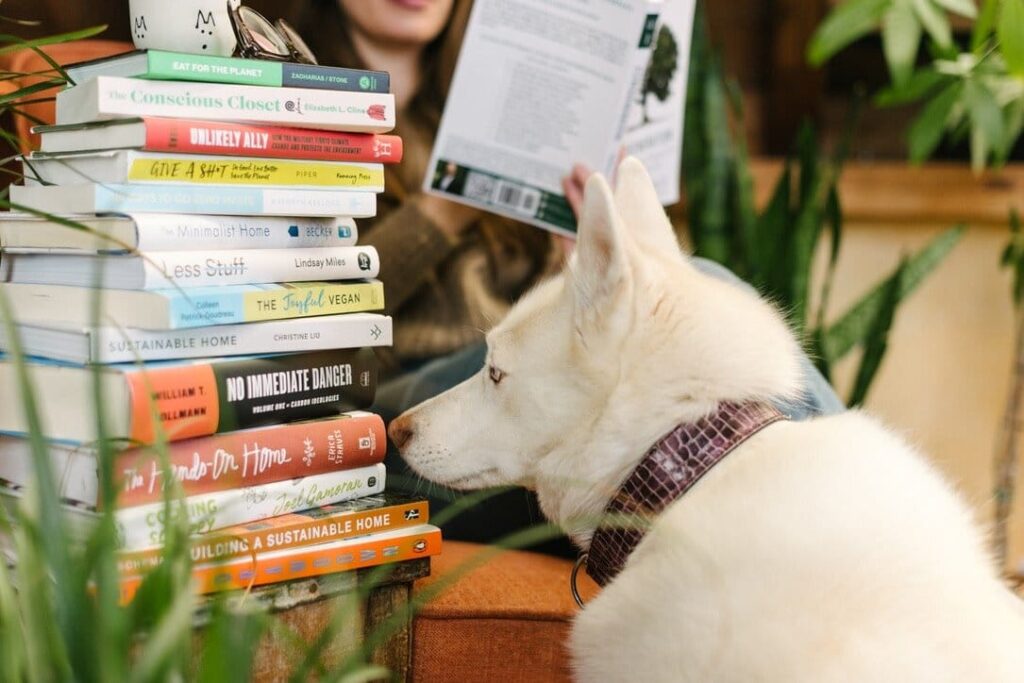
These are the sustainable living books we’ve read so far, and I’m always taking suggestions. Feel free to drop your best books on sustainability in the comments below!
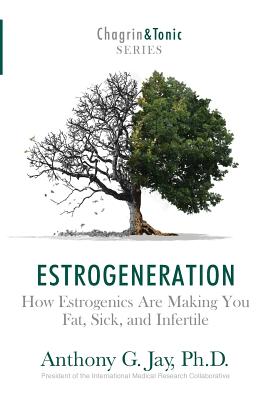
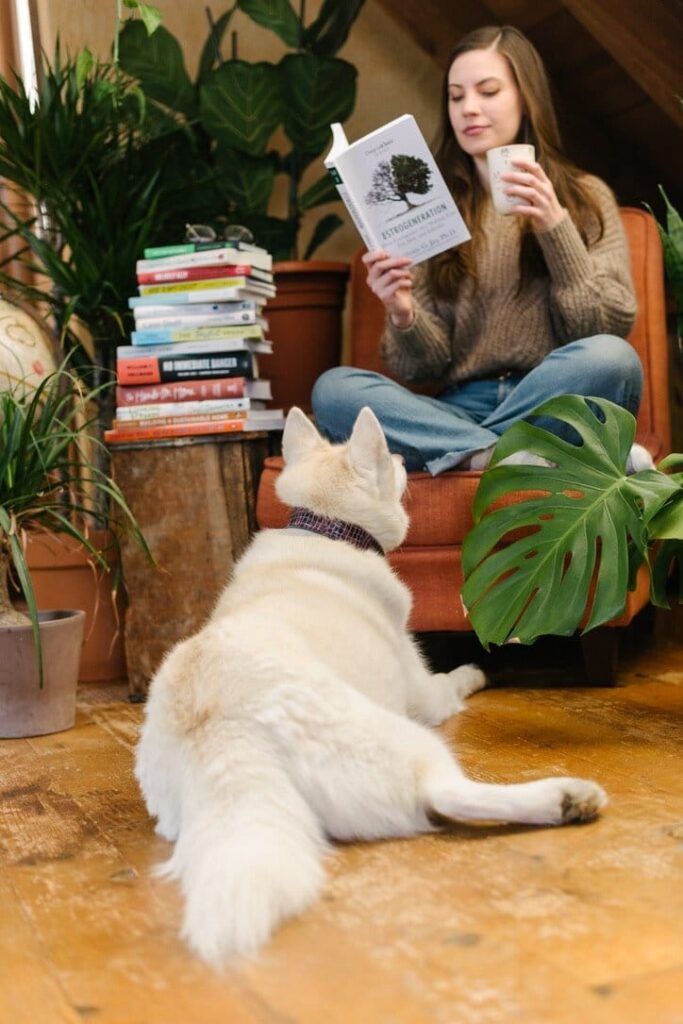
Estrogeneration
This book is all about the endocrine disruptors around us in everything from beauty products, cleaning products, and even plastic.
It’s a total eye-opener and really drives home how living a zero-waste lifestyle is healthier for you and the planet.
I can’t wait to see how this little club evolves and grows, and I really hope that you’ll be joining me for book #1!
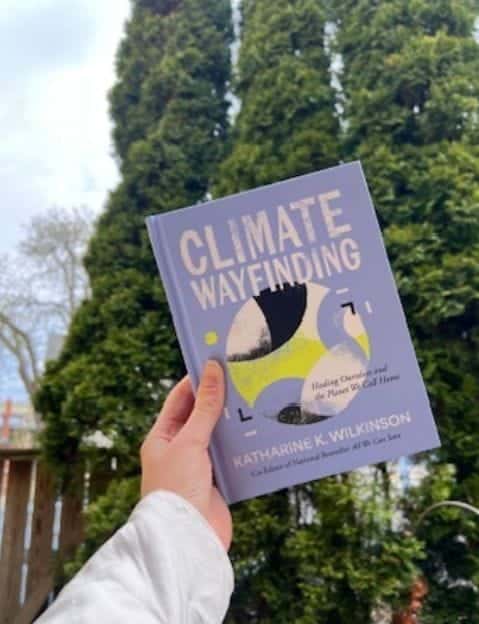
Climate Wayfinding
Are you suffering from climate burnout? This book is an empowering guide to help you turn that overwhelm into action.
Katharine K. Wilkinson helps you chart a course towards playing your unique part in the planet’s collective healing. Through stirring personal essays, and other climate leaders’ poetry, art, and song, Wilkinson shines a beacon for all of us.
Best of all she invites engagement through journal prompts, practical exercises, and guides for conversation. It’s the book I wish I had 4 years ago – a reminder I don’t have to do it all, but what I can do matters.
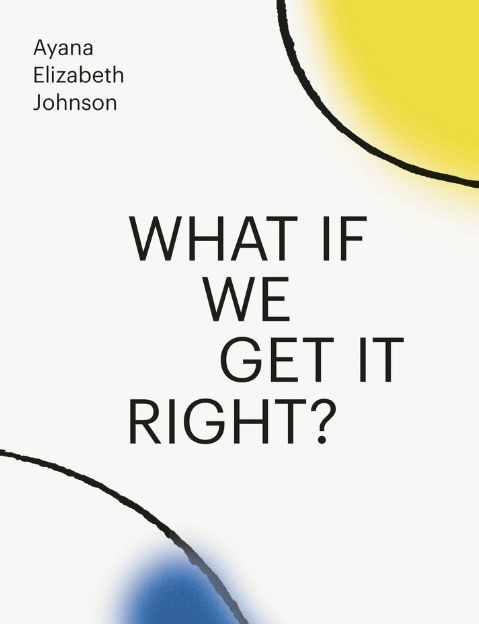
What If We Get It Right?
Ever imagine a future where strong climate policy is put into place and the earth is thriving for it? You can, thanks to this book.
Dr. Ayana Elizabeth Johnson has assembled a collection of essays and conversations on possible climate futures. This collection of interviews, data, poetry and art will ground and inspire you to help advocate a just future for us all.
And if you still don’t know where you fit into everything, she invites you to ask three simple questions to help you find your role in a positive climate future: what brings you joy; what work needs doing; and what are you good at? That’s your climate action.
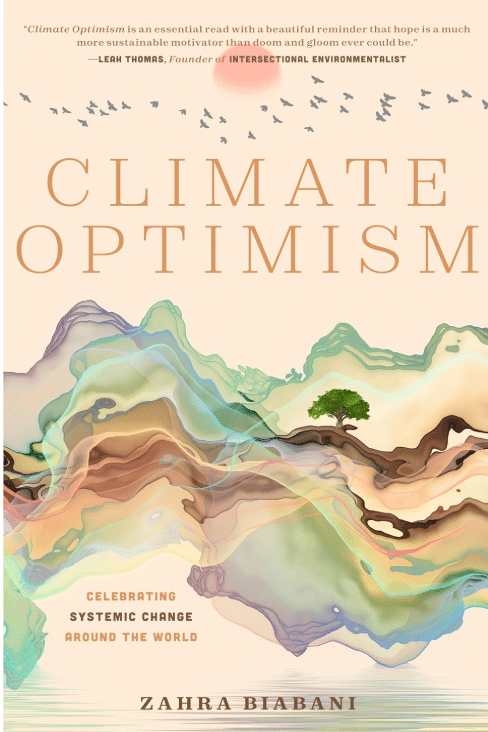
Climate Optimism
If you’re sick of doomscrolling, give this book a read. Zahra Biabani provides tangible systemic solutions we can all take beyond individual and lifestyle changes.
We all need to do our part – and not give up on the climate crisis. Biabani advocates for changing how we think about the climate to implement nature-based solutions.
And while headlines news can leave us feeling bleak, it’s important to remember there are so many people doing good all over the world. Biabani provides two years worth of good news from her Weekly Earth Wins series to prove it!
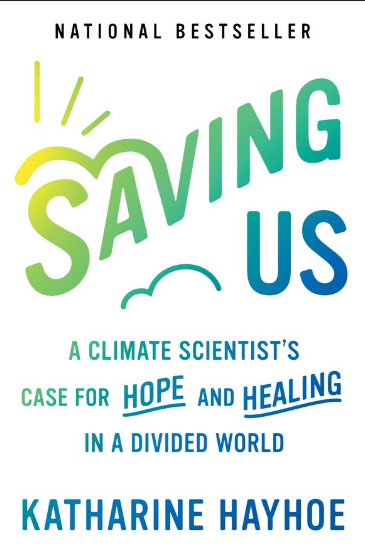
Saving Us
If you’ve ever wondered how to broach the subject of climate change with people in your circle, this is the book for you. Katharine Hayhoe knows how to navigate all sides of the conversation on our changing planet. And she shows you how to as well.
With so much division in the world, sometimes it can be daunting to engage in climate talks with argumentative friends and family.
But Hayhoe does a wonderful job of illustrating how interconnected we all are – whether we realize it or not – and how we can make climate action relevant to every circle (even things like sports!).
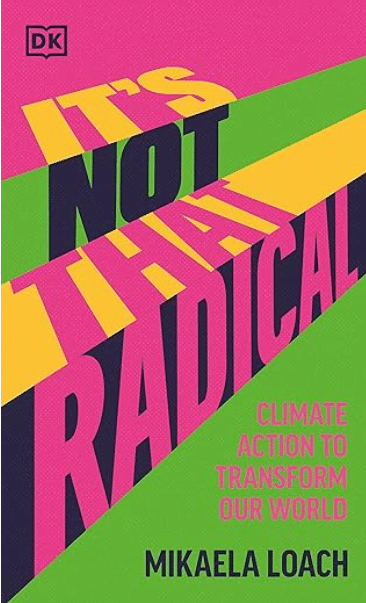
It’s Not That Radical
We can’t have climate action without climate justice. For too long, mainstream media has white-washed, green-washed and diluted solutions to be made compatible with capitalism. But profit shouldn’t come before planet (or its people!).
Mikaela Loach offers real climate action that could help dismantle oppressive systems that harm both people and planet. Because tackling the climate crisis also requires us to visit the roots of poverty, capitalist exploitation and environmental racism.
Her ideas offer accessible climate justice that would benefit us all – not just a select few.
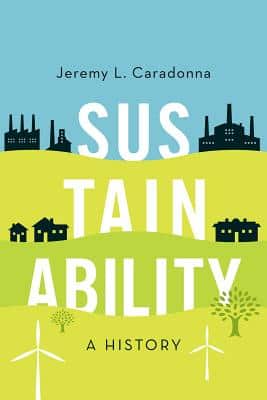
Sustainability: A History
I love history and etymology, so I found this book fascinating!
This book tracks the origins of the word Sustainability and how it’s become used so prevalently in our modern society.
The term ‘sustainability’ was first used in the 1600s.
This might sound like a dry textbook read, but I promise it’s not.
It’s really entertaining, and I think it lays a good groundwork for understanding the challenges we’ve faced in the past and how they’re very much tied to the future.
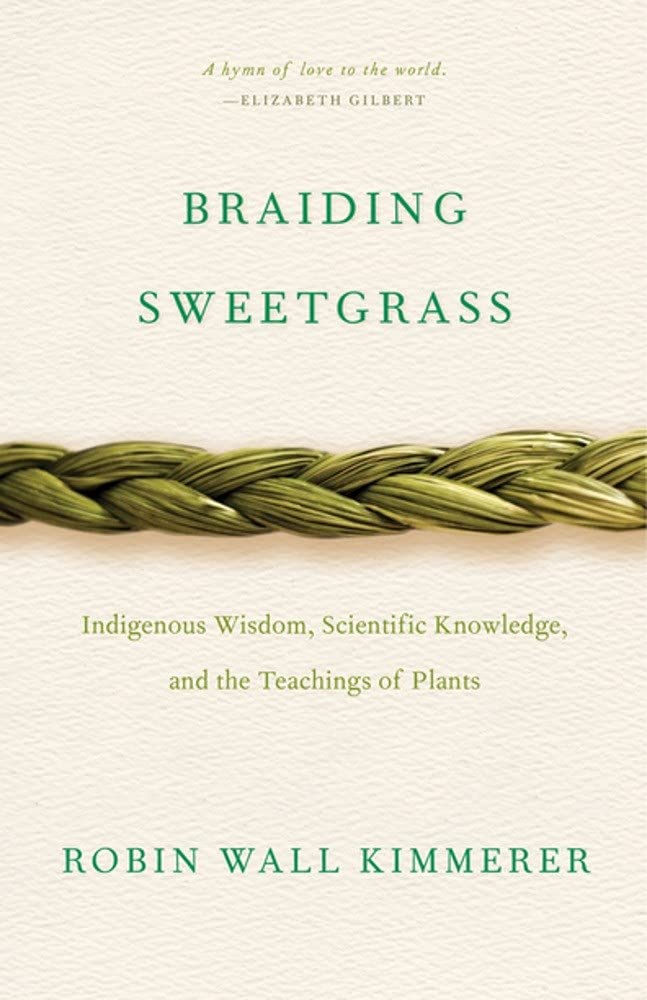
Braiding Sweetgrass
This book is one of my all time favorites. It’s a beautiful love story written to the Earth written by Dr. Robin Wall Kimmerer and reflects on her life as an Indigenous woman and scientist.
She circles toward a central argument: that the awakening of ecological consciousness requires the acknowledgment and celebration of our reciprocal relationship with the rest of the living world.
For only when we can hear the languages of other beings, will we be capable of understanding the generosity of the earth and learn to give our own gifts in return.
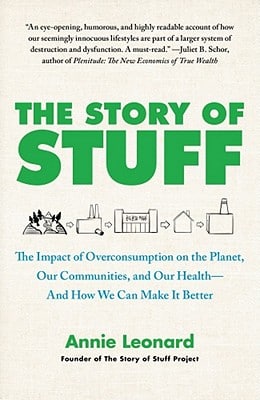
Story of Stuff
This book takes a deep look at systems, processes, manufacturing, and even the advertising of STUFF. The things we buy and how this is fueling the climate crisis.
Annie Leonard highlights each step of the materials economy and its actual effect on the earth and the people who live near sites like these.
She shares concrete steps for taking action at the individual and political level to bring about sustainability, community health, and economic justice.
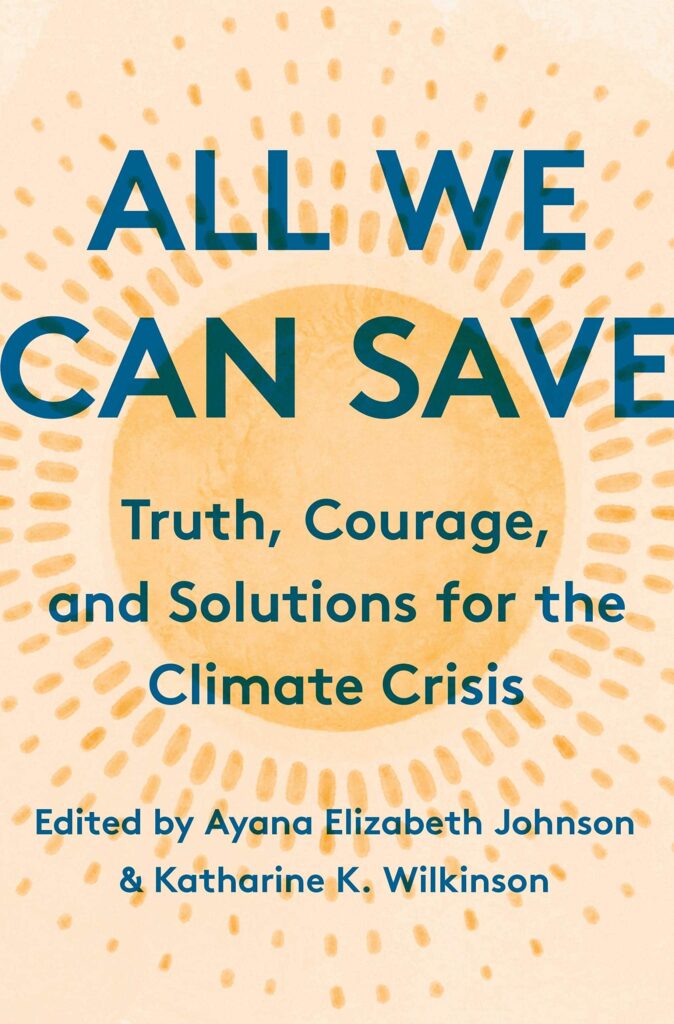
All We Can Save
This book is a must read. It combines the expertise and insights of diverse women leading on climate all across the U.S.
It’s an amazing book that focuses on solutions and collective action through personal essays, art, and poetry.
Featuring scientists, journalists, farmers, lawyers, teachers, activists, innovators, wonks, and designers across generations, geographies, and race, it aims to advance a more representative, nuanced, and solution-oriented conversation to rapidly reshape society.
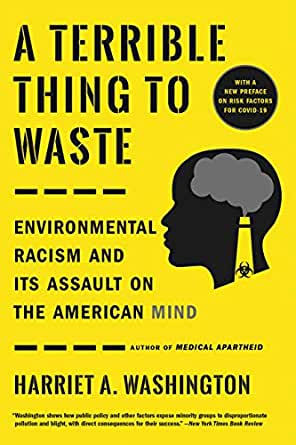
A Terrible Thing to Waste
This book takes a deep dive into environmental racism — a confluence of racism and other institutional factors that relegate marginalized communities to living and working near sites of toxic waste, pollution, and insufficient sanitation services.
Award-winning science writer Harriet A. Washington investigates heavy metals, neuro-toxins, deficient prenatal care, and bad nutrition to explain why communities of color are disproportionately affected — and what can be done to remedy this devastating problem.
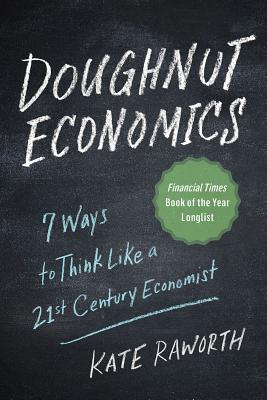
Doughnut Economics
Oxford academic Kate Raworth identifies seven critical ways in which mainstream economics has led us astray.
She creates a new, cutting-edge economic model that is fit for the 21st century — one in which a doughnut-shaped compass points the way to meet the needs of all within our planetary means.
Doughnut Economics promises to reframe and redraw the future of economics for a new generation.
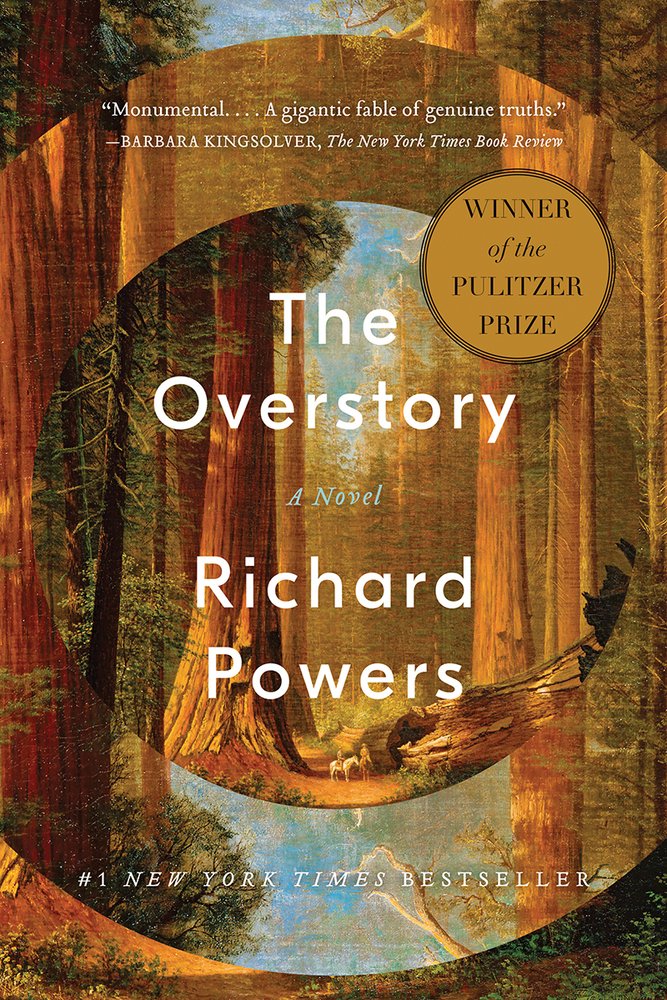
The Overstory
The Overstory is a sweeping, impassioned work of activism and resistance that is also a stunning evocation of — and paean to — the natural world.
From the roots to the crown and back to the seeds, Richard Powers’s twelfth novel unfolds in concentric rings of interlocking fables that range from antebellum New York to the late twentieth-century Timber Wars of the Pacific Northwest and beyond.
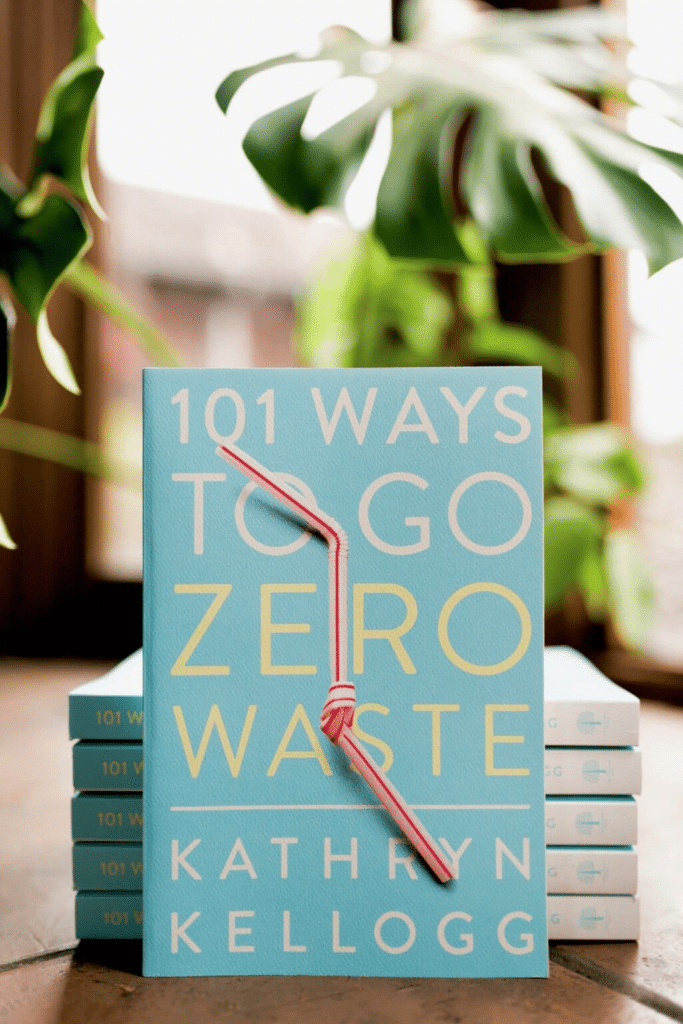
101 Ways to Go Zero Waste
I wrote a book! 101 Ways to Go Zero Waste is a non-judgmental, beginners handbook for eco-friendly and sustainable living.
It’s full of 101 tips + a bunch of never before seen recipes for beauty, cleaning, and food scraps. Read it cover to cover, or jump to the page/question that pertains to you at that moment.
It’s the beginners’ guide I wish I had when I started this zero waste journey, and I hope it does the trick for you!
faqs
isn’t it an oxymoron to read physical copies of books about sustainable living?
There is such a thing as sustainable books! Naturally, the most eco-friendly way to read a book is with an e-reader or audiobook version. Physical books do unfortunately contribute to deforestation and water waste.
However, if you’re the kind of person who will read the book more than once or likes to mark them up with notes and highlighters, it’s worth buying a physical copy of it. It’s all about long-term use!
If you prefer a physical copy, but are not passionate about re-reading or marking them up, consider checking it out from the local library. This way, one book isn’t read once and then shelved permanently. One copy can see many eyes when you use a library!
do i need a book to start a zero waste lifestyle?
Absolutely not! There’s a ton of information online (I have a blog entirely dedicated to it). However, a green living book can pinpoint one facet of sustainable living and explore it A to Z, which many people find helpful.
There are also a lot of people who would rather have the information condensed in an easy-to-read book than have to slog through article after article trying to discern fact from fiction.
Sustainable books are just one option for learning about this lifestyle. It’s totally up to you and your preferred way of learning, though!
Love this idea for a book club! Will sign up now 🙂
<a href="http://www.ellacharlottejones.co.uk">www.ellacharlottejones.co.uk</a>